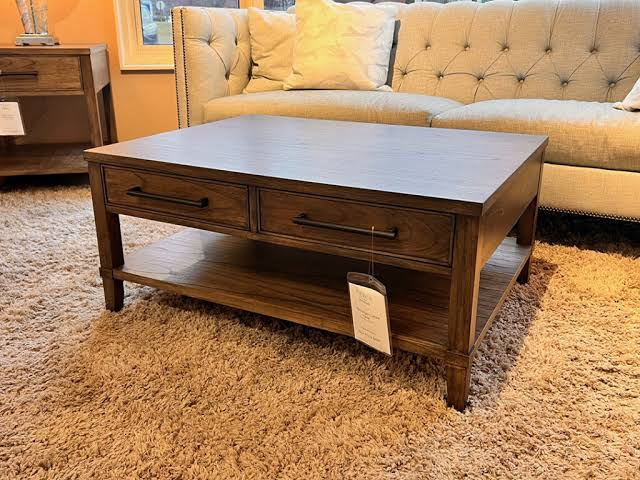


A sofa marked down substantially has been on a showroom floor for eleven months. It looks well kept. The cushions are plump, the fabric is clean, and the frame feels solid.
The right-hand seat cushion has been sat on several thousand times. The left has barely been touched. That difference will not equalize in normal use, and it will show within a year.
Discounted furniture spans several distinct categories, and each carries its own kind of wear. Knowing which category a piece falls into determines what to inspect and what the reduction is actually compensating for.
The Categories Are Not Interchangeable
Reduced-price furniture reaches the floor by different routes.
Discontinued stock is new and unused, withdrawn because the line is ending or the finish is being replaced. The reduction reflects availability rather than condition.
Floor models have been displayed and handled. They are structurally new but have accumulated uneven use.
Overstock is surplus inventory, new and boxed, reduced to clear space.
Customer returns have been in a home for a period ranging from days to weeks, and their condition varies widely.
Scratch-and-dent pieces have specific cosmetic damage, usually from transit or handling, which is documented.
The inspection differs for each, and asking which category a piece belongs to is the first useful question.
Display Wear Concentrates Rather Than Spreads
Showroom use is not light use distributed evenly. It is heavy use concentrated in specific places.
On seating, the end nearest the aisle takes most of the traffic. Arm caps on the approach side show more compression. The seat cushion people naturally sit on shows more than its neighbor.
On case goods, the drawers people open show wear on their runners while others remain new. The door nearest the walkway has been opened repeatedly.
Table surfaces accumulate scuffs where merchandising displays sat and where people leaned.
Because the wear is concentrated, checking one part of a piece does not describe the whole of it. Comparing symmetrical elements against each other reveals more than examining any one in isolation.
Cushion Recovery Indicates Foam Condition
Seat foam compresses under repeated load and recovers over time, and its recovery capacity declines with use.
Pressing firmly into a cushion and releasing shows how quickly it returns. Foam in good condition rebounds promptly; foam that has been compressed heavily returns slowly or incompletely.
Comparing two cushions on the same piece is more informative than judging one. A difference in recovery between them indicates uneven use and predicts uneven appearance in the future.
Removable cushion covers allow inspection of the foam itself. Compression set, where the foam holds a permanent shape, is visible when the cover is off and is not correctable.
Down and fiber fills flatten and can be redistributed by plumping. Foam cores cannot be restored the same way.
Frame Condition Is Checked Under Load
Frames do not show their condition visually.
Lifting one front corner of a sofa a short distance off the floor shows whether the frame flexes. A sound frame lifts as a unit; a compromised one twists, and the opposite corner stays down or the piece racks.
Sitting and shifting weight side to side reveals looseness. Creaking indicates joints that have worked loose or fasteners that have moved.
Chairs are checked by grasping the back and pushing laterally against the seat. Any independent movement between back and seat indicates a joint problem.
On tables, downward pressure at one corner shows whether the base is stable and whether the top is securely attached.
Frame problems are the ones worth walking away from. Cosmetic issues are visible and priced accordingly; structural ones are not always either.
Documented Damage Is Priced, Undocumented Damage Is Not
Scratch-and-dent pieces come with a description of the fault, and the reduction reflects it.
Verifying that the described damage matches what is present, and that nothing else is present, is the entire inspection. A piece described as having a scratch on one side and carrying a second on another has not been assessed accurately.
Damage location determines whether it matters. A mark on a surface that faces a wall is different from the same mark on a tabletop.
Photographing the condition at purchase establishes what was accepted, which matters if a dispute arises later.
Retailers offering clearance furniture Portland buyers browse in person generally document known faults on the tag, and reading that description before inspecting focuses attention on whether anything is missing from it.
Warranty Terms Vary by Category
Coverage on reduced items is not uniform.
Discontinued and overstock stock, being new and unused, frequently carries the standard manufacturer warranty in full.
Floor models may carry reduced coverage, since the piece has been in service, and terms differ between retailers.
Scratch-and-dent and as-is items are commonly sold without coverage, with the documented fault excluded by definition.
Return policies differ from warranty. Many reduced items are final sale, which makes the in-store inspection the only opportunity to assess condition.
Asking specifically what coverage applies, and whether the item can be returned, produces clearer information than assuming standard terms.
Availability Constraints: Matching and Replacement
Reduced stock is, by definition, limited, which affects decisions beyond the single piece.
Buying one item from a discontinued line means no matching pieces will be available later. Where the intention is to build a set over time, this rules the option out.
Replacement cushions, covers, and hardware for discontinued lines become unavailable once existing stock clears. Asking whether spares exist, and buying them at the same time, is worth doing for upholstered items.
Multiple pieces from the same reduced line are worth taking together where they will be used together, since returning for the second is rarely possible.
What the Inspection Covers
The checks are quick and specific.
Which category the piece falls into, and what that implies. Symmetrical elements compared against each other for uneven wear. Cushion recovery, tested by compression. Frame stability, tested under load. Every documented fault verified, and the piece checked for undocumented ones. Warranty and return terms confirmed in writing. Availability of matching pieces and spares.
The reduction on a well-chosen piece reflects circumstance rather than quality. The reduction on a poorly chosen one reflects a problem that was described accurately and inspected quickly.