

Someone with a quarter-sized tattoo in solid black ink might be done in six sessions over eight months. Someone else with a colorful, densely packed piece on their ankle could be looking at fifteen sessions spread across two years. The gap between those two timelines comes down to a handful of factors that most people don’t think about until they’re already in the chair.
Why There’s No Single Answer
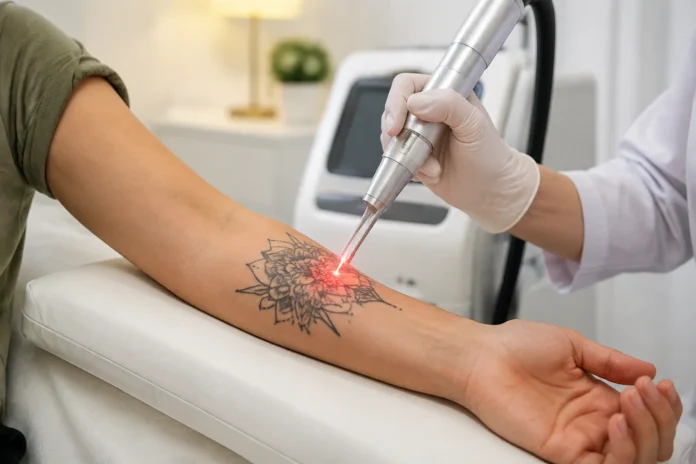
Tattoo removal works by breaking down ink particles with laser energy so the body’s immune system can carry them away. That process depends on how your body responds to treatment, not just how many times you show up. Two people with identical tattoos can heal at completely different speeds because of genetics, age, and even how well their lymphatic system clears debris.
This is why any technician who promises an exact number of sessions before seeing your tattoo in person is guessing. A realistic estimate only comes after an assessment of the ink, the skin, and your health history.
The Factors That Actually Matter
Ink color plays a bigger role than most people expect. Black and dark blue respond fastest because they absorb laser wavelengths efficiently. Greens, yellows, and light blues take longer and sometimes never fade completely, even after a dozen sessions.
Depth and density of the ink matter just as much. A tattoo done by an amateur with a single needle pass sits differently in the skin than a professional piece with heavy shading and multiple layers of ink. Older tattoos, especially ones done decades ago with less refined equipment, sometimes clear faster simply because the ink has already started breaking down naturally over the years.
Skin tone affects treatment settings too. Technicians have to adjust laser intensity for darker skin to avoid pigment changes, which can mean more sessions at gentler settings rather than fewer sessions at aggressive ones.
Typical Session Counts and Spacing
Most tattoos need somewhere between six and twelve sessions, though larger or more colorful pieces can require fifteen or more. Sessions are spaced six to eight weeks apart at minimum, sometimes longer for people who heal slowly or have larger treatment areas. That spacing isn’t arbitrary. The skin needs time to clear away broken-down ink particles between treatments, and rushing the process by scheduling sessions too close together increases the risk of scarring without actually speeding up results.
This means even a straightforward six-session removal stretches out to nearly a year once you factor in proper healing time. A more complex case involving twelve to fifteen sessions can easily take two to three years from start to finish.
What Speeds Up or Slows Down the Timeline
Sun exposure on the treatment area between sessions slows healing and can force a technician to delay the next appointment. Smoking has a similar effect, since it restricts blood flow and makes it harder for the body to clear ink particles efficiently. Staying hydrated and keeping the area protected from UV rays between treatments genuinely makes a measurable difference in how quickly a tattoo fades.
Age also factors in more than people realize. Younger skin tends to have better circulation and a more active immune response, which can shave sessions off the total timeline compared to older skin treating the same size and color of tattoo.
The equipment used matters too. Picosecond lasers, which deliver energy in ultra-short pulses, tend to clear ink faster than older Q-switched lasers, particularly for stubborn colors like green. Not every clinic has invested in this newer technology, so it’s worth asking what type of laser will be used before starting treatment.
Setting Realistic Expectations From the Start
A proper consultation should include a close look at the tattoo, a discussion of your skin type and health history, and an honest range rather than a fixed promise. Anyone offering a guaranteed number of sessions or a guaranteed timeline without examining the tattoo first isn’t giving you accurate information.
For residents in the northwestern suburbs of Melbourne, trusted tattoo removal specialists in Moonee Ponds, VIC typically walk clients through this assessment process before quoting any kind of timeline, which helps set expectations that actually hold up over the following months. That kind of upfront honesty saves frustration later, especially for anyone hoping to have a tattoo gone before a specific event or deadline.
Fading is also gradual and sometimes uneven. It’s common to see faster results after the first two or three sessions, followed by a slower plateau as the remaining ink becomes harder to break down. This doesn’t mean the treatment has stopped working. It usually means the remaining ink is deeper or more resistant, which is normal and expected.
The Real Timeline to Plan Around
Anyone considering tattoo removal should plan in terms of years, not months, especially for larger or more colorful tattoos. Budgeting for eight to twelve sessions spaced two months apart, with occasional delays for sun exposure or slow healing, gives a far more accurate picture than hoping for a quick fix. Patience and consistency with appointments end up mattering more than any single product or technique, and going in with that mindset makes the entire process far less frustrating.