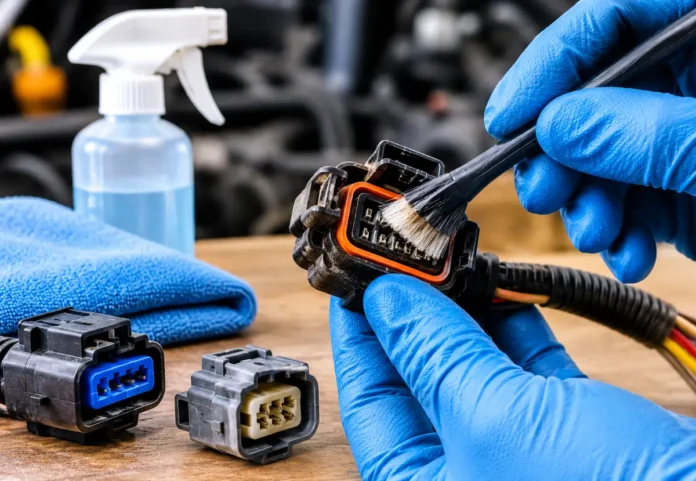


When it comes to maintaining reliable electrical connections across industrial equipment, machinery, vehicles, and electronic devices, it is fair to say electrical connectors play an integral role. For this reason, these components must be kept clean.
In the event of dirt, grease, oxidation, and/or flux residues being allowed to gather on electrical connectors over time, there can be a higher risk of adverse consequences such as increased contact resistance, on-and-off faults, and even premature failure.
Specialist contact cleaning sprays from RS can be a convenient solution for removing such contaminants. However, it is of critical importance to choose the right product for these purposes, given the tendency for most modern connectors to be housed in plastic with rubber or elastomer seals.
Why Do Electrical Connectors Need to Undergo Regular Cleaning?
Electrical connectors are exposed to various contaminants over the course of their normal operation. The gradual accumulation of dust, dirt, grease, oil, moisture, and oxidation on contact surfaces can eventually undermine the electrical connection.
With ever-greater contamination, the electrical connections that depend on these devices can become less reliable. This can be a particular problem in the most demanding environments, where there could be serious implications for the operation of control systems, machinery, instrumentation, and other sensitive installations.
The routine inspection and regular cleaning of electrical connectors can therefore go a long way to maintaining the performance of installations and minimising the likelihood of contamination-related malfunctions.
Connector cleaning should, though, form just one part of a suitable broader maintenance process, instead of being treated as a substitute for investigating damaged or deteriorating components.
The Importance of Plastic Compatibility for Cleaning Electrical Connectors
As far as connectors are concerned, the electrical contacts themselves are often made from conductive metals, which tend to be robust.
On the other hand, the surrounding housings, insulator bodies, strain reliefs, and gaskets frequently incorporate engineering plastics such as ABS, polycarbonate, acrylic, polystyrene, or nylon. Meanwhile, rubber or silicone seals play an important role in keeping out moisture and dust.
It is these latter materials that can potentially come under attack due to the aggressive solvents commonly found in some general-purpose or older-style cleaners.
When solvents such as toluene, xylene, acetone, and certain chlorinated compounds are applied to certain types of plastics, the effects may include:
- Softening or swelling. Plastics might swell, soften, or lose some of their original mechanical properties when certain troublesome solvents come into contact with them.
- Cracking and crazing. Some plastics can be particularly prone to environmental stress cracking. So, chemical exposure may lead to these materials showing fine surface cracks.
- Discolouration. The use of notorious cleaning agents on electrical connectors can be detrimental to the appearance of plastic housings and insulating components.
- Loss of structural integrity. A plastic component being exposed to harmful solvents repeatedly or for an extended period may be weakened as a result. This may compromise the plastic part’s ability to protect and support electrical connections.
It is, of course, important to emphasise that these effects are not universal. The exact compatibility between the cleaning product used and the plastics being cleaned will hinge on the specific plastic, the cleaning agent’s chemical composition, the concentration used, exposure time, and environmental conditions.
Final Thoughts: Ensuring Plastic Compatibility Helps Ensure Long-Term Reliability
All the aforementioned factors and risks underscore how important it is for technicians, engineers, and maintenance professionals to check plastic compatibility, carry out any testing that may be needed, and follow basic safety steps.
Doing this will help ensure the sustained cleanliness and reliability of electrical connections, without compromising the integrity of surrounding materials.
Specialist contact cleaning sprays are available on the market that have been formulated with electronics specifically in mind. It is these products that tend to provide a particularly effective and controlled solution for the cleaning of electrical connectors.