

AI-generated answers are changing how people discover businesses, compare products, and research potential suppliers. For marketing leaders, this raises a practical question: should budgets move from traditional search engine optimization (SEO) to generative engine optimization (GEO)?
Research from Pew Research Center found that users clicked traditional search results in 8% of Google visits featuring an AI summary, compared with 15% of visits without one. The findings, based on observed browsing activity in March 2025, suggest that AI-generated summaries can change how users interact with search results.
However, fewer clicks in some search experiences do not mean traditional SEO has become irrelevant. Google, Bing, and other search systems still play important roles in website discovery, and many AI search features rely on information retrieved from the web.
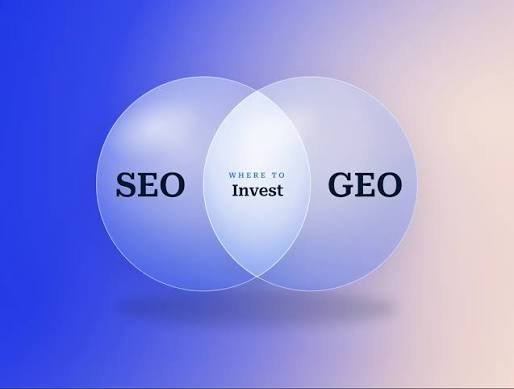
The budget decision therefore requires more nuance than shifting money from one discipline to another. Marketing teams need to understand where SEO and GEO overlap, what GEO adds, and which investments contribute to measurable business outcomes.
GEO vs. SEO: What Is the Difference?
SEO improves a website’s ability to appear in relevant organic search results. It involves technical accessibility, content relevance, site architecture, internal linking, and other factors that support search visibility.
GEO focuses on improving how accurately and frequently a brand, product, or organization appears in AI-generated answers. This can involve website content, structured information, independent sources, technical accessibility, and measurement across AI-assisted search experiences.
Both disciplines aim to make useful information discoverable, but their outputs are not identical.
Traditional SEO commonly measures rankings, impressions, organic clicks, and conversions. GEO introduces additional questions about whether AI assistants mention a brand, cite its content, or include it in relevant recommendations.
For example, a cybersecurity company might rank well for “managed endpoint security” but rarely appear when users ask AI assistants to compare providers for mid-sized businesses.
That gap could reflect missing product information, limited independent coverage, or differences in how the assistant retrieves sources.
However, it does not automatically indicate an SEO failure. Different search experiences select and present information differently.
Where SEO and GEO Overlap
Several activities support both disciplines:
- Publishing accurate, useful content that addresses customer questions.
- Maintaining accessible, crawlable webpages.
- Organizing content through clear headings and internal links.
- Keeping company and product information consistent.
- Improving documentation and supporting evidence.
- Maintaining a technically reliable website.
These activities should not be duplicated under separate SEO and GEO budgets.
For example, improving an outdated product comparison page may help traditional search users and provide more useful information for AI-assisted research.
The same content improvement can support multiple discovery channels.
What GEO Adds Beyond Traditional SEO
GEO introduces areas that may not be fully covered by existing SEO reporting and workflows.
These include monitoring brand mentions inside AI answers, analyzing which sources assistants cite, identifying gaps in entity information, and evaluating how products are described in generated comparisons.
A GEO programme may also require closer coordination with PR, product marketing, and technical documentation teams.
The difference is particularly relevant for B2B companies, where purchasing decisions often involve detailed product research and multiple stakeholders.
Why Marketing Budgets Are Being Reconsidered in 2026
Marketing teams are responding to changes in search behavior while operating under continued pressure to demonstrate commercial returns.
Gartner’s 2025 CMO Spend Survey reported that marketing budgets remained at 7.7% of company revenue among surveyed organizations. Although that figure is not a GEO-specific budget benchmark, it illustrates the broader spending constraints facing marketing leaders.
Introducing another marketing discipline without reviewing existing expenditure can create overlapping responsibilities and fragmented reporting.
For example, a company might pay an SEO agency to improve technical accessibility while separately commissioning a GEO audit that recommends the same fixes.
The result is additional cost without necessarily creating additional value.
AI Search Changes the Visibility Question
Traditional organic search reporting answers questions such as:
- Which queries generate impressions?
- Where does the website rank?
- How much organic traffic arrives?
- Which pages generate leads or revenue?
AI search creates additional questions:
- Does the brand appear in relevant AI-generated answers?
- Which competitors are mentioned?
- Which sources are cited?
- Is the product described accurately?
- Are relevant comparisons missing important information?
These questions matter because a potential customer may encounter a brand through an AI-generated recommendation without immediately visiting its website.
However, AI visibility should not be treated as equivalent to commercial impact. A mention in an informational answer may have little value if the audience is irrelevant or the recommendation is inaccurate.
Marketing teams need measurement that connects visibility with qualified demand where possible.
What Should Businesses Continue Funding in SEO?
The introduction of GEO does not remove the need for established SEO work. Several foundational activities remain essential for search visibility, user experience, and website performance.
1. Technical SEO and Website Accessibility
Search systems need access to relevant pages before they can retrieve or index their information.
Technical SEO covers crawling, indexing, redirects, canonical URLs, site architecture, and rendering issues.
These activities remain important because AI search experiences may also depend on accessible web content.
For example, a SaaS company’s documentation portal might contain valuable integration guides that are unintentionally blocked from indexing.
Resolving the issue can support conventional search discovery and improve the availability of information for compatible AI retrieval systems.
Budget implication: Maintain technical SEO funding, particularly for websites with complex architecture, frequent updates, or extensive documentation.
2. High-Intent Search Content
Not every search ends with an AI-generated answer. Users continue to visit websites when they need detailed information, interactive tools, product documentation, pricing, or direct transactions.
Pages addressing strong commercial intent can therefore remain valuable acquisition assets.
Examples include:
- Product and service pages.
- Pricing and package explanations.
- Industry-specific solution pages.
- Integration and compatibility documentation.
- Detailed product comparisons.
- Implementation and onboarding resources.
A B2B software company should not stop improving its product pages simply because AI assistants can summarize software categories.
These pages still help buyers verify information and take the next step toward purchase.
Budget implication: Protect content that contributes to qualified leads, sales opportunities, and revenue.
3. Website Conversion Optimization
Visibility creates opportunities, but the website must still convert relevant visitors into customers.
A company could improve its AI citations while continuing to lose prospects through confusing navigation, unclear messaging, or complicated enquiry forms.
Conversion rate optimization addresses these problems through customer research, analytics, and controlled testing.
For example, simplifying a demonstration booking process may improve outcomes from organic search, paid advertising, referrals, and AI-driven traffic.
Budget implication: Continue funding conversion improvements that benefit multiple acquisition channels.
Where GEO Deserves Additional Investment
GEO spending becomes more useful when it addresses gaps not already covered by existing marketing activity.
These gaps vary between organizations, but several areas commonly deserve investigation.
AI Visibility Measurement
Most conventional SEO dashboards do not fully explain how a company appears across AI assistants.
A GEO measurement programme can establish a representative set of customer questions and track citations, mentions, and product descriptions.
For example, a B2B analytics provider might monitor questions about reporting software, dashboard integrations, implementation costs, and enterprise requirements.
The team can record which vendors appear and which sources support the answers.
This provides a baseline for identifying gaps and monitoring changes over time.
Entity and Product Information
AI-generated answers may draw on information from multiple websites. Inconsistent company descriptions, outdated product profiles, and unclear relationships between brands can complicate research.
GEO work may involve reviewing official company information, product documentation, relevant directories, and structured data.
For example, a technology vendor that has changed its product name should ensure its current branding is clearly connected to older references.
The objective is to reduce confusion and improve factual consistency.
Independent Coverage and Third-Party Sources
Some customer questions require perspectives beyond a vendor’s own website.
Independent reviews, industry publications, research, and technical comparisons can provide additional context.
PR and GEO teams may therefore collaborate to identify topics where credible third-party coverage is limited.
However, paid placements and repeated press releases should not be mistaken for guaranteed AI citations.
The priority is useful, accurate information published through appropriate channels.
AI-Specific Content Gaps
Traditional keyword research may overlook detailed questions people ask conversational AI assistants.
For example, someone might ask which customer management platforms support a particular integration while meeting specific security requirements.
If a vendor supports those requirements but does not document them clearly, the problem may be informational rather than promotional.
GEO research can identify these gaps and guide improvements to product pages, FAQs, and technical documentation.
How Much Budget Should Go to GEO vs. SEO?
There is no reliable universal percentage that every business should allocate to GEO in 2026.
The appropriate split depends on existing organic search performance, customer research behavior, website maturity, available resources, and the commercial importance of AI-assisted discovery.
A business with major technical SEO problems should not redirect most of its budget toward AI visibility monitoring.
Similarly, an established B2B company with strong organic performance may have more room to test GEO-specific initiatives.
Scenario 1: A Business With Weak SEO Foundations
Consider a company whose website has indexing problems, limited service information, and poor organic visibility.
Its priority should be resolving those weaknesses before investing heavily in separate GEO programmes.
An illustrative allocation of its combined search optimization budget might be:
- 80% SEO foundations: Technical improvements, core content, and conversion-related fixes.
- 20% GEO exploration: Baseline AI visibility testing and identifying information gaps.
This is a planning example, not an industry benchmark.
The GEO work should inform the SEO programme wherever possible rather than create a second set of competing tasks.
Scenario 2: An Established B2B Company With Strong Organic Search
Now consider a software provider with reliable search traffic, detailed product pages, and established reporting.
Its existing SEO programme may already cover technical maintenance and high-intent content.
An illustrative allocation could be:
- 65% established SEO: Maintaining performance and improving commercially valuable content.
- 35% GEO-specific work: AI visibility measurement, source analysis, entity consistency, and relevant content gaps.
The exact percentages should change based on observed opportunities.
If AI visibility testing reveals limited commercial relevance, the company may choose to keep GEO spending lower.
Scenario 3: A New Company Entering a Competitive Market
A newly launched business needs both discoverability and credible information about its offering.
However, it may lack sufficient customer data to justify large investments in specialized AI visibility programmes.
An illustrative allocation might be:
- 75% core search and content development: Building accessible service pages, useful resources, and measurement infrastructure.
- 25% GEO-oriented research: Understanding AI-assisted buyer questions and ensuring accurate company information.
The priority should be developing reusable assets rather than purchasing separate campaigns for every discovery channel.
These examples demonstrate different planning approaches. They are not recommendations to reallocate spending without reviewing actual performance.
How to Build a SEO Budget Without Duplicating SEO Costs
Marketing leaders should begin by auditing existing work before creating a new budget line.
The objective is to identify which activities already support AI search and which require genuinely additional resources.
Step 1: Review Existing SEO Deliverables
Examine current agency contracts, internal responsibilities, and reporting processes.
Identify whether the programme already includes technical audits, structured data, content improvements, competitor research, and brand information management.
These activities may support GEO without requiring separate delivery teams.
Step 2: Identify New GEO Requirements
Determine which capabilities are missing.
For example, the company may need a structured prompt-testing process, AI citation monitoring, or a review of third-party product information.
Define the expected output of each activity before assigning a budget.
A measurement programme should produce more than screenshots of AI responses. It should identify meaningful visibility patterns and actionable improvements.
Step 3: Assign Clear Ownership
SEO specialists may own technical accessibility and website content optimization.
Product marketing may own positioning and product information. PR teams may manage relevant earned media opportunities.
A GEO lead can coordinate these activities and monitor AI visibility without duplicating every function.
Smaller businesses may assign coordination to an existing marketing manager rather than create a dedicated role.
Step 4: Set an Evaluation Period
A new GEO programme should have a defined initial review period.
For example, a company could run a three-month pilot focused on a representative set of customer questions and a limited number of priority improvements.
The pilot might measure whether important product descriptions become more accurate, whether relevant citations change, and whether identified content gaps are resolved.
However, three months may not be sufficient to establish revenue impact, particularly in B2B markets with long sales cycles.
The evaluation should distinguish operational progress from commercial outcomes.
When to Use Generative Engine Optimization Services
External support may be appropriate when a company needs specialist analysis or lacks the resources to coordinate GEO across multiple teams.
However, businesses should assess whether an agency offers capabilities beyond their existing SEO arrangements.
Useful services may include:
- AI search visibility audits and baseline measurement.
- Prompt-set development based on customer research.
- Technical accessibility and structured-data reviews.
- Brand and product information consistency checks.
- AI citation and competitor source analysis.
- Content recommendations linked to buyer questions.
- Ongoing reporting and programme coordination.
For B2B organizations, the work should connect to how buyers evaluate products and suppliers.
A software company may need stronger documentation and comparison content. A professional services firm may benefit more from clearer expertise signals, relevant case studies, and independent industry coverage.
Businesses evaluating GEO services for B2B should ask how the proposed work integrates with existing SEO, PR, and product marketing activities.
GTMLab’s approach to digital growth can support this coordination by connecting search visibility with broader marketing and commercial objectives.
The important consideration is whether the programme addresses a specific visibility problem and produces measurable improvements rather than simply introducing another marketing service category.
Which Metrics Should Guide Budget Decisions?
Budget allocation should follow evidence rather than assumptions about the future of search.
Marketing teams need to understand how SEO and GEO contribute to discovery, engagement, and commercial performance.
SEO Metrics to Keep Tracking
Continue monitoring:
- Organic search impressions and clicks.
- Visibility for commercially relevant queries.
- Qualified organic traffic.
- Landing page conversion rates.
- Organic leads and sales opportunities.
- Revenue influenced by organic search.
These indicators help explain whether existing SEO investments remain productive.
A decline in clicks should also be investigated carefully. It may reflect changes in rankings, search demand, result-page features, or user behavior.
GEO Metrics to Introduce
A GEO programme can track:
- AI citation share: How often the company’s domain is cited within a defined set of tested responses.
- Brand mention rate: How frequently the brand appears in relevant AI answers.
- Recommendation presence: Whether the brand appears in appropriate product or provider comparisons.
- Source visibility: Which third-party sources appear alongside competitors.
- Response accuracy: Whether AI systems describe the company’s offerings correctly.
These measurements should use consistent prompts, platforms, and testing procedures.
Results can vary between runs, so teams should evaluate patterns rather than individual responses.
Connect Both to Commercial Outcomes
AI citations and search rankings are intermediate indicators. Marketing leaders ultimately need to understand whether discovery activity contributes to business results.
Where data is available, examine AI referral traffic, branded search trends, qualified enquiries, and customer-reported discovery sources.
For example, a B2B company might add a question to its enquiry form asking how the prospect first discovered the business.
That information can complement analytics, although self-reported attribution has limitations.
Avoid claiming that an increase in AI mentions directly caused revenue growth without supporting evidence.
Three Budget Mistakes Marketing Leaders Should Avoid
Cutting Proven SEO Activity Too Early
Moving budget away from high-performing organic pages can damage existing acquisition channels.
Before reducing SEO spending, review which pages generate qualified demand and which activities maintain their performance.
Funding GEO Without a Measurement Plan
A programme that promises better AI visibility but cannot define how progress will be assessed is difficult to evaluate.
Agree on representative prompts, relevant platforms, reporting methods, and expected deliverables before committing to ongoing spending.
Creating Separate Teams for Overlapping Work
Technical accessibility, structured information, and content quality already sit within many SEO programmes.
Duplicating these responsibilities can increase costs and slow execution.
Where possible, use shared workflows and introduce specialized GEO responsibilities only when they address genuine gaps.
The Practical Budget Decision for 2026
SEO and GEO should not be treated as competing investments by default. Both depend on accurate, accessible information, and many improvements support multiple discovery experiences.
Traditional SEO still provides valuable infrastructure, search visibility, and measurable website acquisition. GEO extends that work into AI-generated answers, where citations, brand mentions, and product descriptions require additional attention.
The appropriate allocation depends on the company’s existing performance and the importance of AI-assisted research within its customer journey.
For most marketing teams, the sensible starting point is to protect productive SEO investments, establish a modest GEO measurement programme, and expand spending when evidence supports it.
That approach allows businesses to adapt to changing search behavior without abandoning the channels and assets that already contribute to revenue.