

The actual decision in interlock cases is made by the person monitoring the interlock. The interlock device itself has very little to do with the case of the individual who has an interlock installed in their vehicle. In fact, identical hardware can be issued to two different individuals, with very different results being recorded against each individual. Therefore, the decision as to who is to provide the interlock for the driver is a compliance decision and not just a purchasing decision.
Criteria to Check for Program Reference prior to referral to center for monitoring of participant in interlock program for 6 months or longer.
Verify the certification, then read what it actually covers
Each state with interlock regulations has a list of approved interlock devices and approved interlock service providers. While a device may be approved and certified for use within a state, the service center providing the service for that device may be approved, suspended, limited or have conditions placed upon their authorization to provide service. Therefore, it is very important to check on the approval status of both the interlock device model and the specific service center where the work will be performed (e.g. A specific store location versus the parent corporation).
Questions that separate approval from competence
- Which device models does this center install, and does it stock parts and handsets for all of them
- Are technicians certified by the manufacturer, and how recently was that training refreshed
- Has the center been cited in any state audit, and what changed as a result
- Who is authorized to release reports to a monitoring authority, and how is identity verified
Installation quality is what makes the record defensible
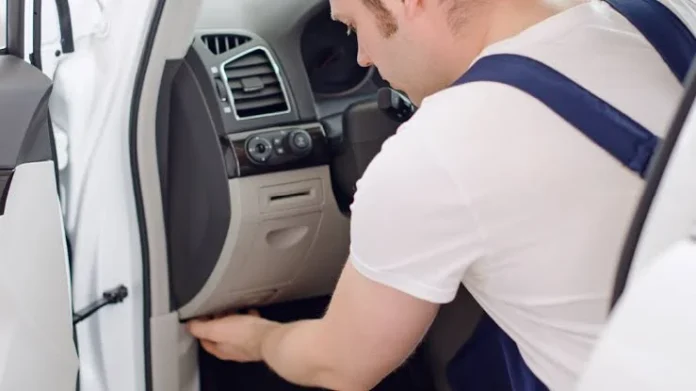
Events are generated by a poor interlock installation. A loose relay connection, for example, can cause a number of events to be generated by the interlock. A tap into the wrong power circuit, an unsecured control head, and a number of other issues can also cause events to be generated by the interlock. These events can then appear as if the driver is violating their interlock requirements.
Vehicles that need extra attention
It is also important to note that the majority of today’s vehicles are equipped with push-button start systems. This can include vehicles such as hybrids, electric vehicles, as well as diesel engines that require the vehicle to go through a glow plug cycle prior to start. In addition, there are many vehicles on the road today that have after-market remote start systems as well as alarm systems that are hard-wired into the vehicle’s wiring. Each of these types of systems requires model-specific procedures for the installation of interlock devices. Ask the center how they document the interlock install at the center. Ask for examples of the documentation that is provided for proof of interlock installation at the center. Ask for examples of photographs of the wiring in the vehicle, as well as examples of where the camera(s) are positioned in the center. Ask how long on average it takes to complete an interlock installation at the center for any given vehicle.
Service cadence, appointment access, and the visits nobody plans for
How often will the device need to be serviced for download and upload of data? Some service centers will allow for a “grace window” of a few days. If the service center locks the vehicle out after this time, it could be several hours before someone is able to come out and service the interlock for the participant. Be sure to ask how long it will take for them to service the device for download and upload of data and how long it will take for them to lock out the vehicle. This will give you an idea of how convenient the center is for the participant’s needs. In addition, be sure to ask how far the center is from the participant’s location and how many devices the center can service in a given time frame, and for drivers in the northern Shenandoah Valley a well-staffed option such as this VASAP interlock Winchester Virginia provider is worth a look before booking anywhere else.
| Visit type | Typical trigger | What the participant should expect |
| Routine calibration and download | Scheduled interval, usually 30 or 60 days | Sensor calibration, data transfer, report generation, updated lockout countdown |
| Early service visit | Recorded violation or reset requirement | Prompt appointment, often within five days, with the event documented |
| Lockout recovery | Missed service window or repeated fails | Bypass code by phone if allowed, or towing to the center |
| Removal | End of the required period with authorization | Restoration of factory wiring and a signed removal certificate |
Practical availability checks
- Published hours, including any Saturday or early morning coverage
- Average wait time for a walk-in versus a booked appointment
- Whether after-hours lockout support is staffed by a person
- Whether mobile or satellite service is offered for rural participants
Data handling and reporting discipline
Download and upload time, How long does it take a provider to download information from an interlock and then upload it to the monitoring authority? This can be a very important factor. Camera images, Are camera images that record a person blowing into the interlock sufficient in quality to identify the individual? Interlock removal, How long does a provider retain records for a removed interlock? Are there provisions in a provider’s own procedures regarding chain of custody?
Interpreting events without overreaching
The best type of interlock monitoring provider is one who will give you the raw data and let the monitoring authority draw the appropriate conclusions. The worst type of interlock monitoring provider is one who will mark events on reports before having all the information and then try to explain away any resulting controversy. This type of provider is best to be avoided. Instead look for one who will document the interlock device’s logic for you in advance of any problems (i.e. In written form upon request).
Cost transparency and the local fit
This would include all costs including the installation fee, monthly monitoring, calibration for data download, cameras, lockout release and removal of interlock. Check to see if the interlock service provider participates in any of the states’ reduced-fee or indigency programs. This would allow someone considering a VASAP interlock Winchester Virginia center against a similar facility in the next county over to compare the total cost of the program at each center rather than just the cost of the initial installation.
Language access to be able to give people instructions in writing as to what to do for retest, and for changes in vehicles, etc. These are not strange requirements, but together they help to explain why some people’s caseloads seem to run smoothly and others seem to generate constant exceptions.